
Half caff, done properly: how we blended ours
It's four in the afternoon. You want a coffee. You don't want to be awake at midnight. That's the point in the day where coffee stops being a pleasure and starts being a calculation.
Half caff is the obvious way out of that. We've written about what half caff actually is and how much caffeine you're really drinking, this is the other half of the story: what went into ours, and why it took a few months.

Most half caff is an afterthought
For some, a half caff consists of whatever decaf happens to be on the shelf, tipped in with whatever caffeinated happens to be on the shelf, in roughly equal measure - simple and cost effective.
We've gone flavour first whilst making it adhere to the same considerations as any other blend we offer: Flavour, balance, consistency and availability.
A few months on the cupping table
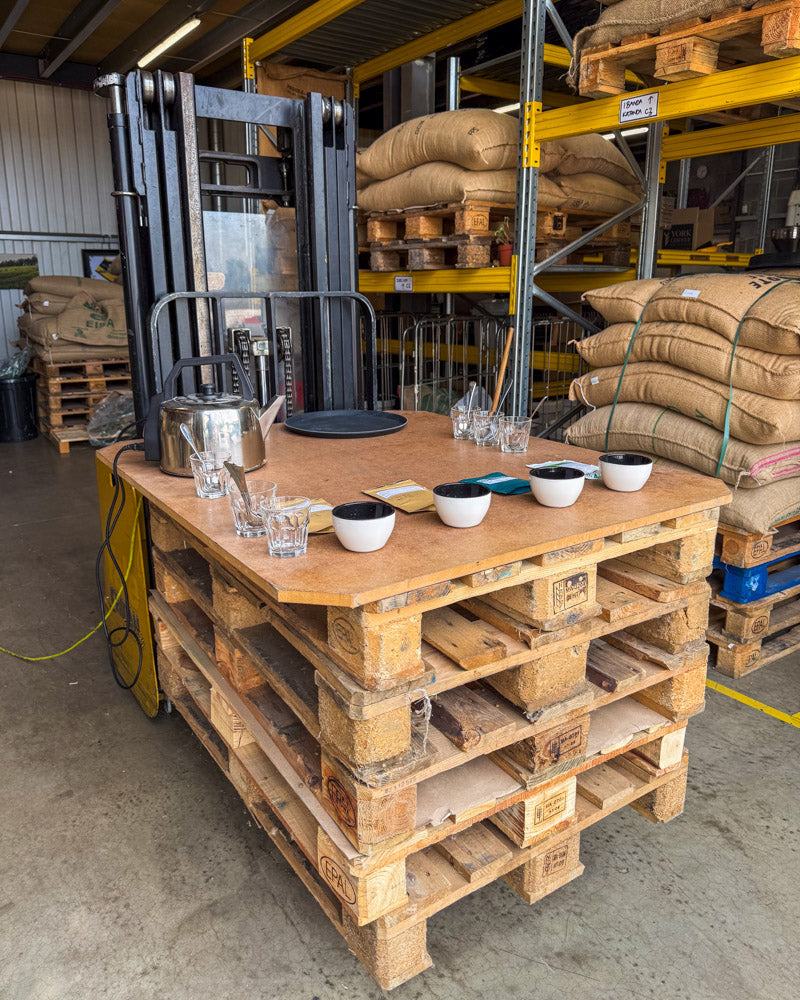
Sam, Lee, and Ellie slurped through countless pairings across a few months looking for something bright, sweet and round enough to work with the decaf without the whole thing turning flat halfway down the cup. The standardised objectivity of 'the cupping table' gives us a precise platform to evaluate from.


I thought they might hate me for the amount of cupping I put them through. Every time they saw me leave the roastery, they assumed it was to cup again...
Lee, Head Roaster.
Why not just use the decaf of the same coffee?
It's the obvious route, same origin, one caffeinated, one decaffeinated, blended together. It's tidy, but a shortcut.
Results were generally a muted version of a coffee we already sell. We wanted the two halves doing different jobs, so we went with The Gunpowder, our house Kenyan and a 2026 Great Taste Award winner, for lift and acidity, and The Cobbles sugarcane decaf, our house Colombian, for sweetness and body. Different origins, chosen for how they taste together.


Two coffees, two roast profiles
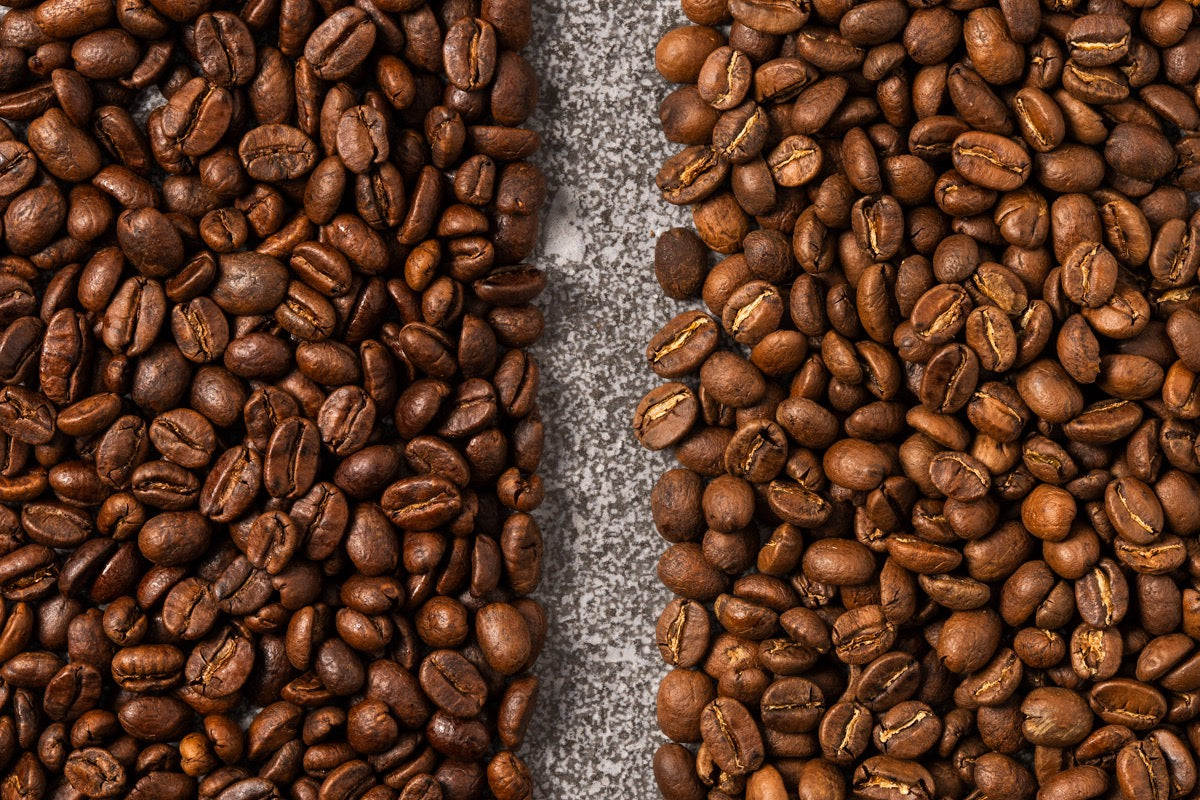
The two halves are roasted separately and blended afterwards.
Decaffeinated beans don't behave like caffeinated ones in the roaster. The decaffeination process changes the structure of the bean, so it takes on colour earlier and reads darker than it actually is. Roast the pair together and you're guaranteed to overdo one or under do the other. If you're curious about what that process involves, we've explained how decaf is made here.
What it tastes like
Green apple, honey and red currant. Those notes were cupped from the finished blend rather than borrowed from the two coffees behind it, which is why they don't read as a halfway point between them. The Gunpowder on its own gives grapefruit and red apple. The Cobbles decaf gives milk chocolate and pecan, together they offer a new profile (which blows my mind a little - DE).
It's clean and bright as a filter or pour-over, with the apple and red currant sitting forward. Through milk the honey takes over and it turns rounder and softer, so it works as an everyday espresso as much as a morning brew.
Both halves are house coffees rather than seasonal lots, so if it turns out to be a piece of you, we can offer it year round.