
How Does Altitude Affect Coffee Taste?
15 min read
Researched and written using sources from NOAA, World Coffee Research, the International Coffee Organization and peer-reviewed academic journals.
Two coffees can come from the same country, the same farm, even the same variety of plant, and taste like they have nothing in common. One is bright, layered and floral, with a finish that lingers and shifts as the cup cools. The other is mellow, nutty, heavier and far simpler. Often the single biggest reason for that difference is how high up the mountain the coffee grew.
Altitude is one of the most repeated words in specialty coffee, and one of the most poorly explained. Altitude is not a single variable: It is shorthand for a whole stack of conditions, temperature, day and night swings, ultraviolet light, rainfall, mist, soil chemistry, all of which conspire to shape the bean inside the cherry. The number on the bag, the metres above sea level, is just the headline.
Key Takeaways
• Altitude itself does not create flavour.
• Altitude influences temperature, sunlight, rainfall and weather patterns.
• Slower ripening generally produces denser beans with greater flavour potential.
• Higher altitude can increase complexity, but it does not guarantee quality.
• Hawaiian Kona proves exceptional coffee can also be grown at lower elevations.

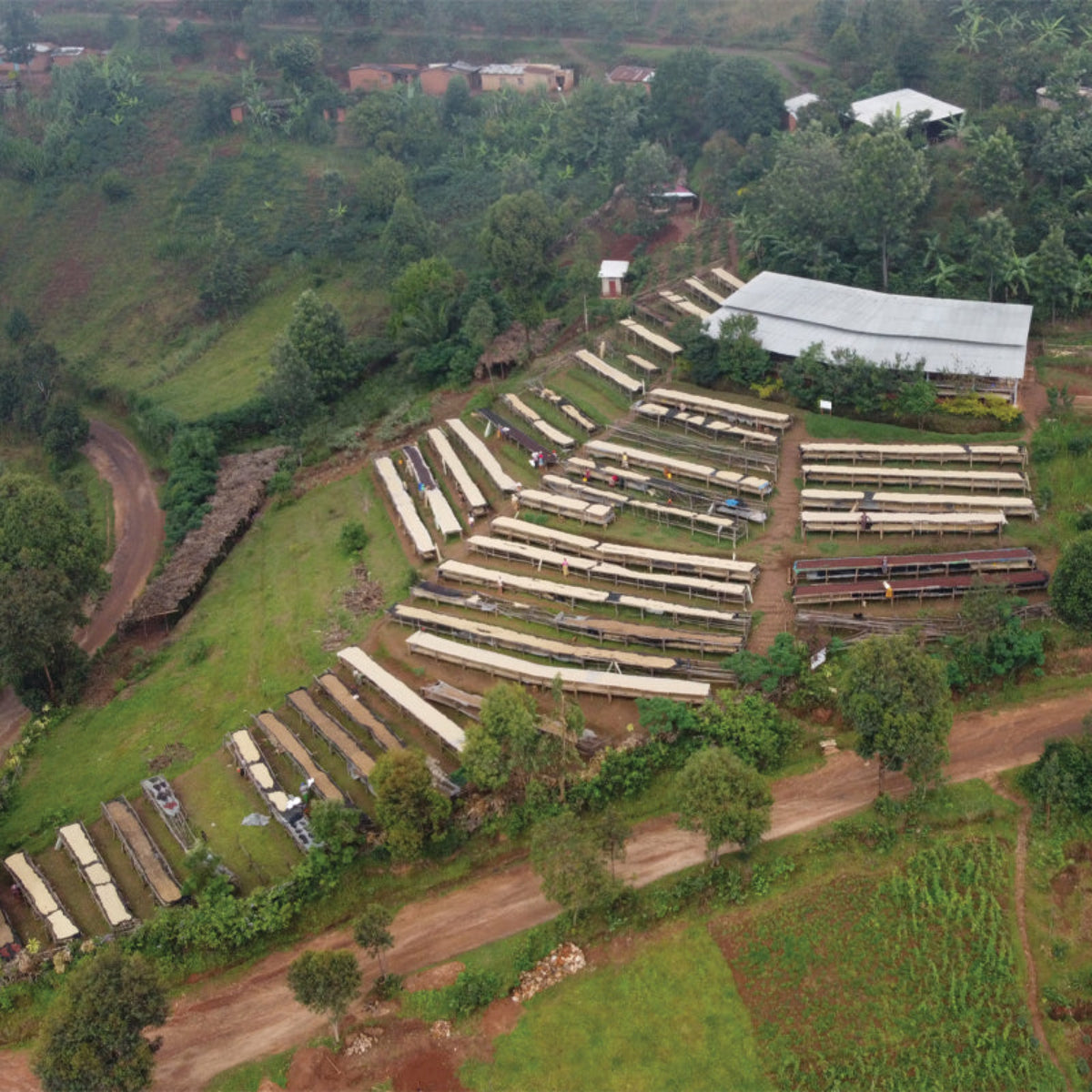
Coffee growing regions by altitude, the five stages of cherry ripening, and how low, mid and high altitude shape the cup.
Altitude is really temperature in disguise
Altitude itself does very little to a coffee plant directly. What altitude really does is change the temperature of the air around it. As you climb a mountain, the air cools at a fairly predictable rate, about 0.6°C for every 100 metres of elevation gained. This cooling is the foundation of the entire process.
Arabica coffee, the species responsible for nearly all specialty coffee, is a fussy plant. It evolved in the cool, shaded highlands of southwestern Ethiopia and it likes a remarkably narrow temperature band. According to NOAA's Climate.gov resource, the optimal mean annual temperature for arabica is roughly 18 to 21°C, and the plant can only tolerate mean annual temperatures up to about 24°C. Push it warmer than that and fruit development accelerates, ripening rushes through and flavour development is cut short. The cup goes flat.
This is why the world's best coffee, despite being grown in the tropics, almost never comes from the lowlands. To find that cool, narrow comfort zone within a few degrees of the equator, you have to go up. A farm sitting at 2,000 metres in tropical Ethiopia or Kenya can experience the same mean annual temperatures as somewhere in the temperate zones at sea level. Altitude is how a tropical farmer buys themselves a cool climate.
This has a dramatic effect on the cherry. At a warm, low elevation a cherry might race to maturity in around six months. Higher up, where mornings are mild but nights turn cold, that same cherry can take nine months, sometimes longer, to ripen fully. On Jamaica's Blue Mountain peaks the cherries take roughly twice as long as cherries grown at lower elevations elsewhere. That extra time is where the intricate nuances of coffee form. The bean inside the cherry has more time to draw in and build up the sugars, acids and aromatic compounds that later become flavour and aroma in your cup.
For a quick comparison, here is how altitude shows up across four very different coffees.
| Coffee | Alt. | Typical Cup Character |
|---|---|---|
| Ethiopia Bekele Kachara | 2,350m | Bright, floral, berry-led, layered |
| Kenya Nandi | 1,900 to 2,100m | Sweet, structured, complex, boozy |
| Jamaica Blue Mountain | 910 to 1,676m | Smooth, balanced, clean, refined |
| Brazil Arara | 950 to 1,400m | Chocolate-led, round, nutty, lower acidity |
The importance of day and night cycles
Cooler average temperatures are only half the story. What really makes high grown coffee special is the 'diurnal range', the daily swing between warm sunny days and properly cold nights.
High up in the tropical mountains the days can still be reasonably warm, sometimes 22 to 26°C in the sun. But once the sun drops, with thin mountain air and no real heat reservoir, the temperature falls fast. Nights at 1,900 metres in Kenya's Nandi Hills regularly sit between 11 and 14°C. At 2,350 metres in Ethiopia's Sidama region, the minimum daily temperature averages around 9.5°C. That is a daily swing of 12 to 15°C, sometimes more.
This rhythm is enormously useful to the plant. During the warm day, photosynthesis runs full tilt and the plant manufactures sugars and energy. When the cold night sets in, metabolism slows to a crawl and instead of burning through those sugars to fuel rapid growth, the plant holds onto them and quietly concentrates them within the developing cherry. Day after day, across an eight or nine month ripening window, that stored sweetness accumulates inside the bean.
A 2026 review in the journal Agriculture linked this directly to flavour chemistry, noting that higher diurnal temperature swings at higher altitudes can boost phenylpropanoid flux by increasing phenylalanine ammonia lyase activity, thereby promoting chlorogenic acid accumulation. In plain English, the bigger the day to night gap, the more aromatic and acid-forward compounds the plant builds into the bean.
This is the real reason high grown coffees are so sweet, so complex and so layered: not the altitude. It is the daily cycle of warm production and cold conservation that altitude makes possible.
How stronger sunlight changes coffee chemistry
Climb a mountain anywhere on earth and you will get sunburnt faster. Ultraviolet radiation, particularly UV-B, increases significantly with altitude because there is simply less atmosphere overhead to filter it. Coffee plants growing high up are exposed to far more UV than their lowland counterparts.
For the plant this is a stress, and stress provokes a chemical defence. To protect itself from UV damage, the coffee plant ramps up production of a whole family of protective compounds called phenolics and flavonoids. These include chlorogenic acids, the same family of antioxidants responsible for a lot of coffee's bright, sharp character in the cup, plus various other aromatic and protective molecules.
Recent peer reviewed research has put real numbers on this. A 2025 study in Nature Scientific Reports found that altitude-driven metabolic changes are characterised by a roughly 0.8 milligram per gram increase in total phenol content for every 100 metres of elevation gained. The plant responds to increased UV exposure by producing more protective compounds. Some of these compounds are linked to the brightness, structure and complexity that coffee drinkers often associate with high-grown coffees. Stress, in this very specific botanical sense, is one of the reasons high grown coffee tastes the way it does.

The soil under the bean matters as much as the air around it
There is another reason many of the world's most celebrated coffee-growing mountains are so productive. A significant number sit on or around ancient volcanic systems, creating fertile soils that coffee plants thrive in.
Many of the most famous coffee-growing regions in Ethiopia, Kenya, Rwanda, Guatemala, Costa Rica, El Salvador, Indonesia and Jamaica are associated with volcanic landscapes and volcanic-derived soils. The soils they leave behind, known to soil scientists as andisols, are extraordinary for growing arabica. Weathered volcanic ash and lava produce soils that are rich in potassium, phosphorus, magnesium, calcium, iron and sulphur, the exact mineral profile that coffee plants love. Potassium in particular drives sugar synthesis and bean development, magnesium supports photosynthesis, and the whole mineral package translates into structure, sweetness and brightness in the cup.
Just as importantly, volcanic soils are porous and free draining. Coffee hates wet feet. Waterlogged roots stress the plant in unhelpful ways and lead to dull, lifeless beans. The loose, well aerated structure of volcanic soil lets the roots breathe, drains heavy mountain rainfall away quickly, and still holds enough moisture between downpours to keep the plant healthy. The slight acidity of weathered volcanic soil, typically a pH around 6.0 to 6.8, sits exactly where arabica wants it for maximum nutrient uptake.
This is why altitude almost always travels with great soil. The same geological forces that built the mountains also gave them their fertility.
Mist, rain and a stable kind of weather
Tropical mountains generate their own weather, and that weather is unusually friendly to coffee.
Warm, moist air rising up a mountainside cools, condenses and forms cloud. The best coffee regions sit at exactly the elevations where those clouds form and persist, draping the slopes in mist for hours every morning. The mist filters the strong tropical sun into something softer, protecting the cherries from heat stress. It adds moisture to the leaves and topsoil between rains. And it stabilises the local temperature, smoothing out what would otherwise be punishing midday highs.
Rainfall on these mountains is usually generous and reliable. Arabica's sweet spot is around 1,200 to 1,800 millimetres a year, with a distinct dry season to trigger flowering and a wet season to fuel cherry growth. Most great coffee origins hit this almost perfectly: Ethiopia's Sidama region averages around 1,200 to 1,300 millimetres of rain a year. Kenya's Nandi Hills receive over 1,100 millimetres, often more, spread across a long wet season. Jamaica's Blue Mountains are extraordinarily wet, with 1,500 to 2,500 millimetres of rain plus near constant mist, all of it draining away through the porous volcanic soil.
The result is a microclimate that is wet enough, cool enough, gently lit enough and stable enough for a fussy plant to thrive. Altitude does not just give the plant cool nights, it generates the entire weather system.
What this does to the bean itself
All of these forces, the cool nights, the long ripening, the UV stress response, the rich draining soil, the misty stable weather, leave a physical mark on the bean inside the cherry.
Slow growth produces a denser, harder bean as there is more material packed into a smaller space. Cup that bean against a fast grown low elevation bean and you can see the difference. The high grown bean is smaller, heavier for its size, often a slightly bluer green, and it roasts very differently. Dense beans tolerate, even reward, higher heat and tighter control. They tend to develop more evenly through the roast and they hold their aromatic compounds better.
The industry takes this seriously enough that several producing countries grade coffee by altitude. The International Coffee Organisation defines Strictly High Grown (SHG) and Strictly Hard Bean (SHB) as terms for coffee grown at altitudes above roughly 1,200 to 1,350 metres, depending on country, with the underlying logic that beans grown at high altitudes mature more slowly and grow harder and denser than beans grown lower down. The exact threshold varies by origin. El Salvador and Costa Rica use 1,200 metres for SHG. Honduras and Guatemala set the bar at 1,350 metres for SHB. Either way, it is a quality grade based purely on the physical bean, and it tracks closely with what comes out of the brewer.
When low altitude is just fine, proven by Hawaii
If altitude were the whole story, no one would grow great coffee anywhere lower than 1,500 metres. But there is one famous exception that proves what altitude is actually doing, and it lives on a Pacific island.
Hawaiian Kona coffee, grown on the slopes of Hualalai and Mauna Loa on the Big Island, sits at just 250 to 760 metres above sea level, an elevation that would produce dull, fast ripened, low value coffee almost anywhere else in the world. Yet Kona is one of the most expensive coffees on the planet and routinely scores at specialty grade. The Kona Coffee Belt is a tightly defined strip of land roughly two miles wide and thirty miles long, with morning sun, afternoon cloud cover, mineral rich young volcanic soil, and the same kind of carefully built microclimate you find on the great African and Caribbean coffee mountains.
How does Kona pull this off at a quarter of the altitude? Latitude. Hawaii sits at about 19 to 20 degrees north of the equator, far enough away from the tropics that its natural temperatures already approach arabica's optimal range without needing the mountain to drag them down. World Coffee Research's variety guidelines make this explicit: optimal altitude depends on a farm's latitude, and farms further from the equator have lower optimal altitudes than those sitting right on it.
This is the test case that confirms everything we have just walked through. Altitude is a means to an end. Temperature is what the plant actually responds to, and altitude is simply the most common way of delivering it in the tropical belt where most coffee grows.
The nuance behind the numbers
Because altitude is really a stand in for temperature, anything else that cools or slows the plant can mimic its effects. Shade is the classic example. A coffee grown under a generous canopy at a lower elevation can mature slowly and develop beautifully, doing some of the work that altitude would otherwise do. This is why two farms at the same height can produce strikingly different coffees, and why the metres alone never tell the whole story.
The laboratory evidence is also genuinely mixed. A widely cited study of arabica grown across a range of altitudes in southwestern Ethiopia, published by Worku, De Meulenaer, Duchateau and Boeckx in Food Research International (2018), found that caffeine and chlorogenic acid levels actually fell as altitude rose, and that the rise in sucrose, the sugar so prized for sweetness, depended heavily on how the coffee was shaded and processed rather than on altitude on its own. Other work has pointed out that sucrose accumulation tends to peak in a fairly narrow temperature band of around 18 to 22°C, not simply higher and higher forever. Push above that and you start losing the very compound you were chasing.
Cupping scores tell a similarly nuanced story. Altitude is correlated with quality, but only weakly once you control for processing, variety and farm management. A well managed coffee farm at 1,100 metres can produce a higher scoring lot than a neglected one at 1,500 metres. Altitude raises the ceiling, it does not raise the floor.
It is also worth busting a popular myth while we are here. You will often read that high altitude coffee is shaped by lower oxygen. This is not really true. The percentage of oxygen in the air does not change with altitude. It sits at roughly 21 percent whether you are at sea level or on a Blue Mountain peak. What changes is the total atmospheric pressure, which falls as you climb, dragging the partial pressure of oxygen down with it. Whether that pressure change has any meaningful effect on the coffee plant itself is a much smaller question than the temperature, light and soil effects we have just walked through.
All this means altitude is a powerful indicator rather than a magic ingredient. It reliably stacks the conditions in coffee's favour, but it works hand in hand with soil, climate, the variety of plant, the skill of the farmer and the care taken after harvest. A great high grown coffee is the product of all of those things lining up at once.
Blue Mountain: altitude as a legend, and a useful lesson

No coffee shows off this whole picture better than Jamaica Blue Mountain, which is exactly why it has spent decades as one of the most sought after coffees on earth.
Certified Blue Mountain is grown in a tightly defined zone on the slopes of Jamaica's Blue Mountains, the highest range in the Caribbean, at elevations between roughly 910 and 1,676 metres. The growing region sits in a cool, misty, high rainfall microclimate, with temperatures between 15 and 24°C, 1,500 to 2,500 millimetres of rain a year, and constant cloud cover that filters the Caribbean sun into something gentle. The soil is weathered volcanic and free draining. Coffee here is predominantly Arabica Typica, grown in a cool, misty environment where cherries mature slowly compared with many lower-altitude origins. The result in the cup is famously smooth and clean, full bodied yet mild, with gentle sweetness, soft brightness, and almost none of the harshness or bitterness you might expect, often carrying hints of chocolate and butter.
What makes Blue Mountain such a perfect teaching example is the twist. At 910 to 1,676 metres it is not actually 'extreme altitude'. Plenty of our other coffees grow considerably higher. Yet Blue Mountain commands a luxury price and a devoted global following. That is the whole lesson of this article in a single coffee. Altitude matters enormously, but it is the complete package, the cool temperatures, the constant mist, the volcanic soil, the perfect rainfall, the protected variety, the meticulous washed processing, that creates something special. The metres are the headline, not the whole story.
It is also worth knowing that the name itself is protected. As documented by the World Intellectual Property Organization, Jamaica Blue Mountain is registered as a Community Trademark in the European Union and as a certification trademark with the UK Intellectual Property Office, with the Coffee Industry Board of Jamaica owning all the marks through its subsidiary Coffee Marks Limited. The mark certifies not just origin but quality, and the trademark is registered in over 50 countries. When you buy real Blue Mountain, you are buying a guarantee of place.
Tasting altitude for yourself
The best way to feel any of this in the cup is to brew the coffees side by side. We stock the full range, from the protected legend of Blue Mountain through coffees grown at some of the highest elevations on the specialty map, down to the rounder, gentler profile of a classic lower grown bean. Three to start with, all from our current shelves, that will show you altitude at work.
The two highest grown coffees we currently stock sit right at the top end of the world's specialty altitude scale.
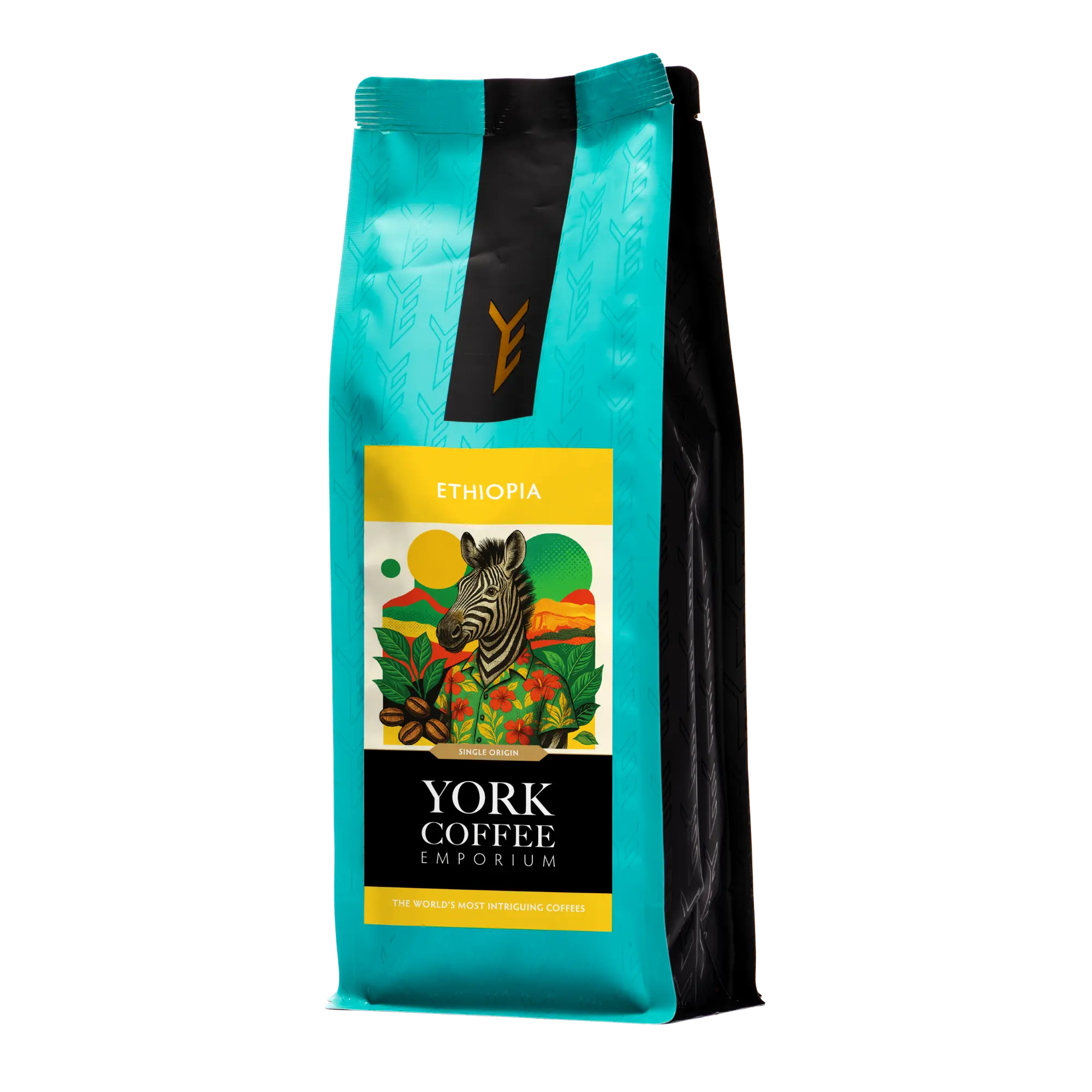
Ethiopia Bekele Kachara
Red Currant | Strawberry | Cream
Grown at 2,350m · From £13.50
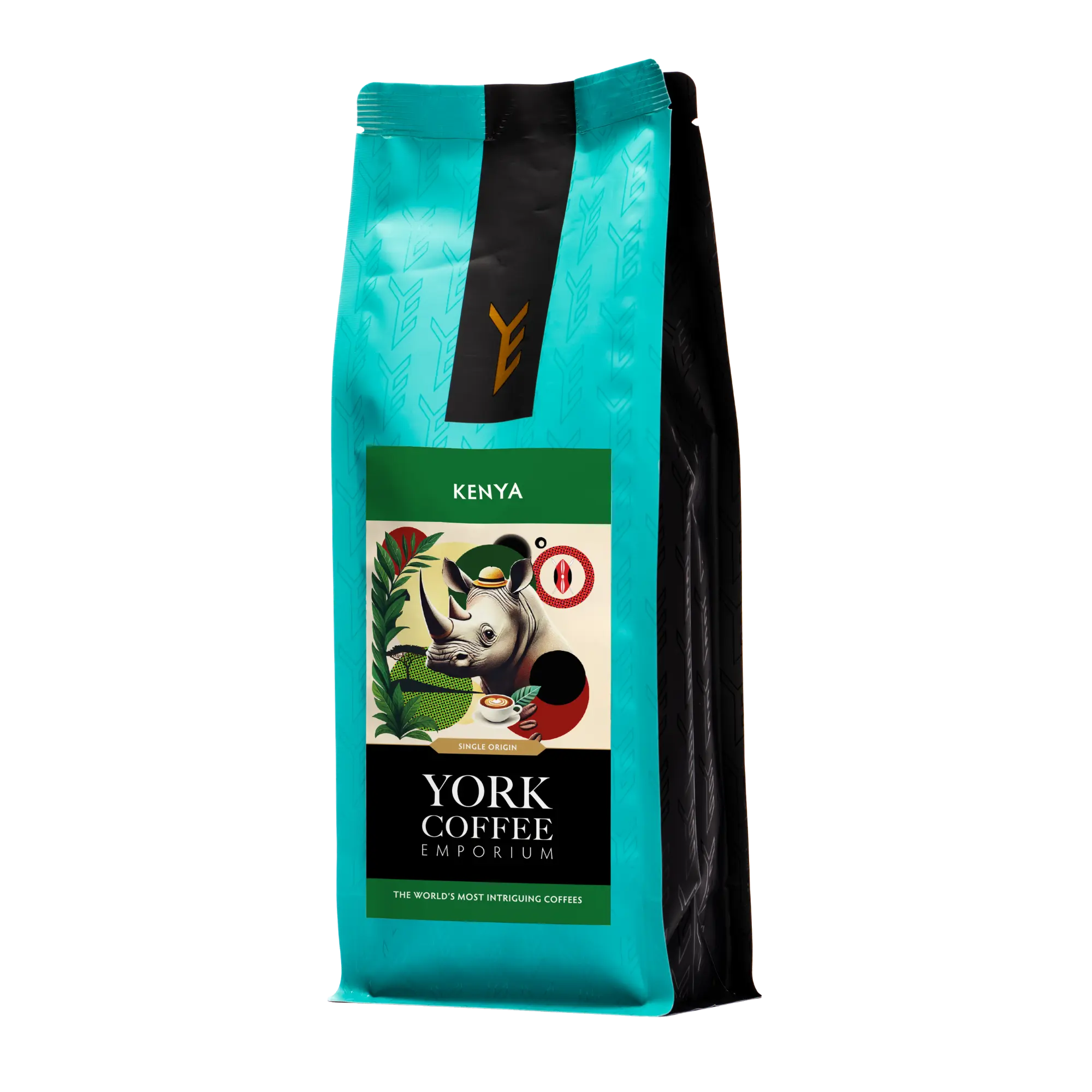
Kenya Nandi
Brandy Butter | Brown Sugar | Boozy
Grown at 1,900 to 2,100m · From £8.50
Our Ethiopia Bekele Kachara, grown on the slopes of Murago at 2,350 metres in the Sidama region, sits at the very top end of the altitude scale. The farm produced a 15th place Cup of Excellence winner in 2022. Naturally processed, it tastes of red currant, strawberry and cream, with the bright, layered, slightly tea-like character that very high grown Ethiopian coffees are famous for. This is the high grown profile in its purest form.
Our Kenya Nandi, grown at 1,900 to 2,100 metres on the edge of the Great Rift Valley, shows what altitude does when paired with Kenya's deeply acidic volcanic soil and the country's famously meticulous processing. The flavour profile here leans toward brown sugar, brandy butter and a soft boozy depth, a different expression of altitude but still unmistakably high grown in its sweetness and structure.
For contrast, brew a cup of our Brazil Arara, grown in the Cerrado Mineiro region of Minas Gerais at around 950 to 1,400 metres. The Cerrado is rolling rather than mountainous, the climate is warmer, the cherries ripen faster and the Arara variety is bred for the lowlands. The cup is rounder, heavier, full of dark chocolate, tangerine and orange. It is a beautiful coffee, and a perfect demonstration of what altitude is not doing.
Brew them in the same order, with the same kit and the same water, and pay attention to the acidity, the finish and how the cup changes as it cools. The high grown coffees will feel brighter, more layered and longer in the finish. The lower grown will feel rounder, more comforting and quicker to settle. Once you have felt that difference on your own palate, the word altitude stops being marketing language and starts being something you can genuinely taste.
Final thoughts
Altitude remains one of the most useful indicators of coffee quality, but it is only ever part of the story. Temperature, sunlight, rainfall, soil, variety, processing and roasting all influence the final cup. What altitude does exceptionally well is create the conditions that allow great coffee to happen.
The next time you see an altitude listed on a bag, think of it as a clue rather than a guarantee. It tells you something about the environment that shaped the coffee, but not everything. The real pleasure comes from tasting the differences for yourself.
Frequently asked questions
Does altitude really make coffee taste better?
Higher altitude reliably stacks the odds in favour of a more complex, brighter, sweeter cup, but it is not a guarantee. The reason high grown coffee tends to taste better is that altitude brings cooler temperatures and bigger day to night swings, which slow ripening and let the bean build more sugars, acids and aromatic compounds. A well managed lower altitude farm can still produce excellent coffee. A neglected high altitude farm can produce a poor one. Altitude raises the ceiling, not the floor.
What is the highest altitude coffee can grow at?
Commercially viable arabica is rarely planted above 2,400 metres, beyond which frosts and very short growing seasons start to make farming impractical. Most of the world's specialty coffee grows between 1,000 and 2,200 metres. The highest known commercial coffee farm is Finca Takesi in Bolivia, with plots reaching around 2,600 metres. Our Ethiopia Bekele Kachara at 2,350 metres is up there with the very highest commercially grown coffees on the planet.
Why does Blue Mountain coffee cost so much if it is not the highest altitude?
Blue Mountain sits between roughly 910 and 1,676 metres, which is mid-high rather than extreme by world standards. Its luxury price reflects the whole package, not just the elevation. The combination of cool misty microclimate, very high rainfall, rich volcanic soil, the Arabica Typica variety, meticulous washed processing, twice the average ripening time, and the protected certification mark that legally restricts who can use the name, all combine to produce a uniquely smooth, clean, balanced cup. The metres are part of the story, not the whole of it.
Can low altitude coffee be high quality?
Yes, and Hawaiian Kona is the famous example. Grown at just 250 to 760 metres, Kona scores at specialty grade and commands premium prices, because Hawaii's distance from the equator means it gets arabica's optimal temperature without needing the altitude. Brazilian Cerrado coffees at around 1,000 metres also routinely score in the specialty range, helped by latitude, careful farming and modern processing. The rule of thumb is that closer to the equator means you need higher altitudes for quality, and further away means less altitude is needed.
What does SHG or SHB mean on a bag of coffee?
SHG stands for Strictly High Grown and SHB stands for Strictly Hard Bean. Both are Central American classifications indicating that the coffee was grown above a defined altitude threshold, usually 1,200 metres for SHG in El Salvador and Costa Rica, or 1,350 metres for SHB in Honduras and Guatemala. They are a quality grade based on the assumption that high altitude has produced a denser, harder, slower grown bean, which tends to translate into a more complex cup. They are a reliable indicator but not a cupping score.
Does high altitude coffee have more caffeine?
Counter intuitively, no. Most peer reviewed research, including the Worku 2018 Ethiopia study cited above, found that caffeine content actually decreases slightly with altitude in arabica. The same is broadly true of chlorogenic acid in absolute terms. What rises with altitude is sucrose under the right conditions, plus the balance of aromatic compounds and the cup quality, which is what most drinkers are actually noticing when they say a high grown coffee tastes better. High altitude does not give you a stronger hit, it gives you a more interesting cup.