
Passion Fruit from Burundi: An Anaerobic Red Bourbon from Migoti Coffee Company

Passion fruit, caramel, cream.
Those aren't the notes you usually find on a bag of Burundi coffee. The country is better known among the buyers who know it at all for clean, washed Red Bourbons with bright acidity and a citrussy backbone, which is what the traditional two-stage washing-station process tends to produce.
This lot has been through something less typical, and it shows up in the cup almost immediately.
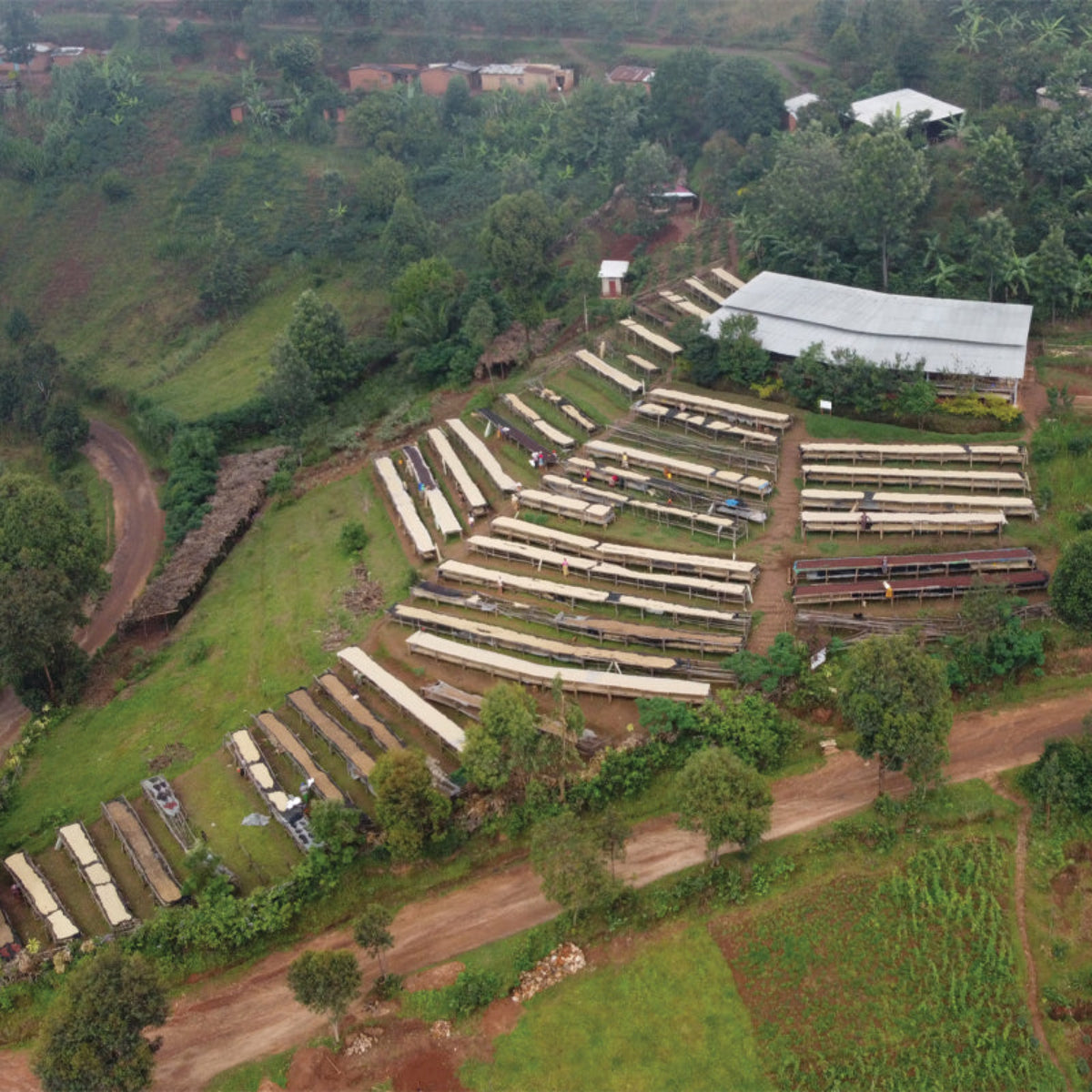
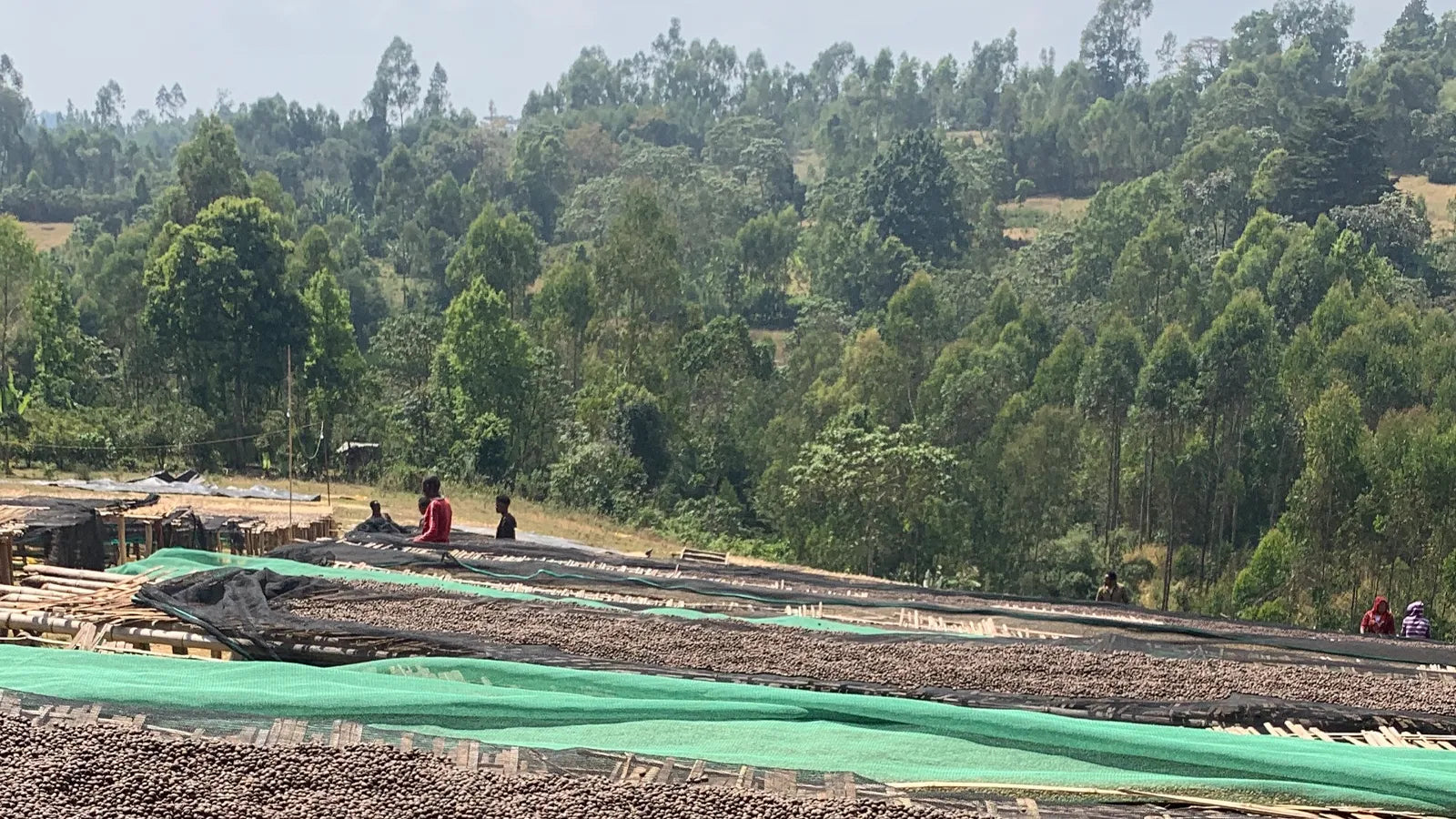
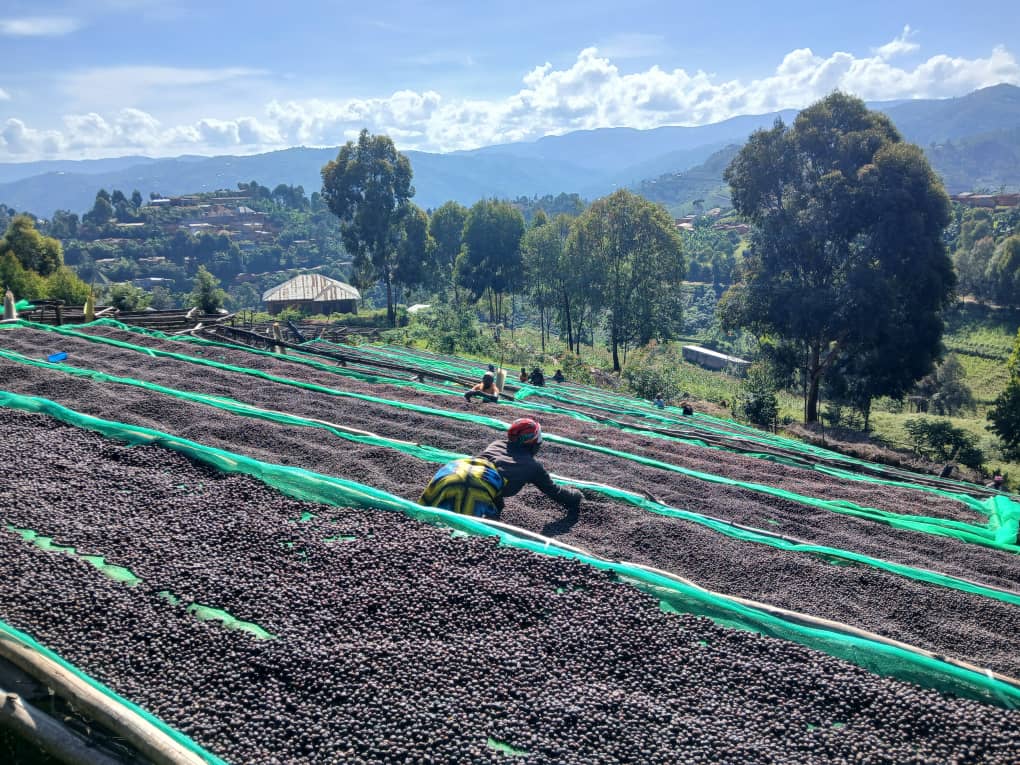
After harvest, the cherries were sealed in closed tanks and fully submerged in water with the lids on, fermenting for two full days with no oxygen. From there, the coffee went out onto raised beds for three to four weeks of slow sun drying.
What came out the other end holds the cleanness you'd expect from a well-processed East African coffee, then layers a fruit-forward sweetness on top that the conventional method just doesn't reach.
There's the passion fruit, almost juicy. Behind it, soft dessert-like caramel that builds rather than announces itself. A cream note underneath holds the body together. The finish runs long and gently sweet, with a faint spiced edge.
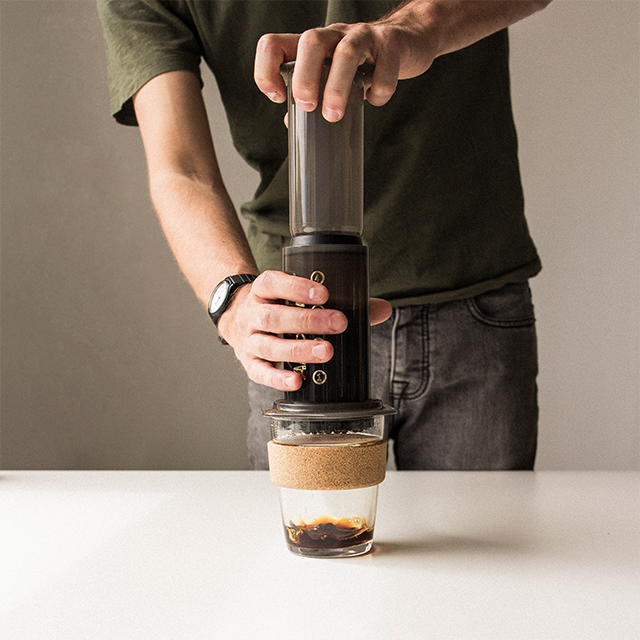
It pulls beautifully as espresso, holds its shape in milk, and brews into something almost peachy on a V60 or Aeropress.
We're roasting it on the lighter side of medium to keep the passion fruit lifted without losing the caramel and cream underneath.
We don't see Burundi made this way often, and the story behind the lot is as interesting as what's in the cup…
The hills that grew it
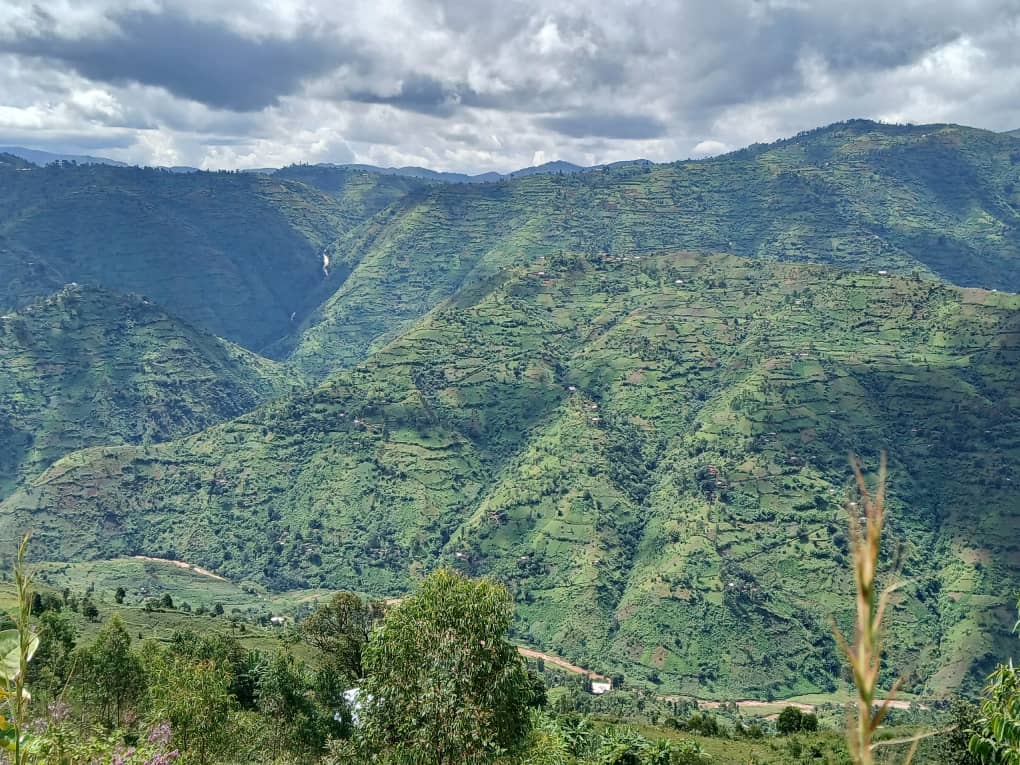
This coffee was grown in Mumirwa, a region of steep hill country running along the western edge of Burundi where the land falls away towards Lake Tanganyika and the border with the Democratic Republic of the Congo. Mumirwa is one of five named coffee growing regions in the country. Farms here range from roughly eleven hundred up to two thousand metres above sea level, with this particular lot grown at seventeen hundred.
These hills are part of the Albertine Rift, the western arm of the Great Rift Valley, which means volcanic soils carrying the kind of mineral structure that translates directly into clean, well-defined acidity in a cup. Rainfall is generous but falls in two distinct wet seasons, giving the trees a clear cycle of growth and dormancy rather than the constant year-round production that often weakens coffee from less seasonal climates.
Daytime temperatures sit in a narrow band, somewhere between eighteen and twenty-two degrees through most of the year. Cherries developing under those conditions take their time. The longer they spend on the tree, the more sugar and organic acid they accumulate, and the more flavour ends up in the bean by the time it's picked. Slow growth concentrates everything.
The trees themselves are Red Bourbon, the heritage arabica variety that runs through the best coffees of Rwanda, Burundi and parts of Ethiopia. Bourbon produces smaller, denser beans than commercial hybrids, and the structure of the bean tends to reward careful processing.
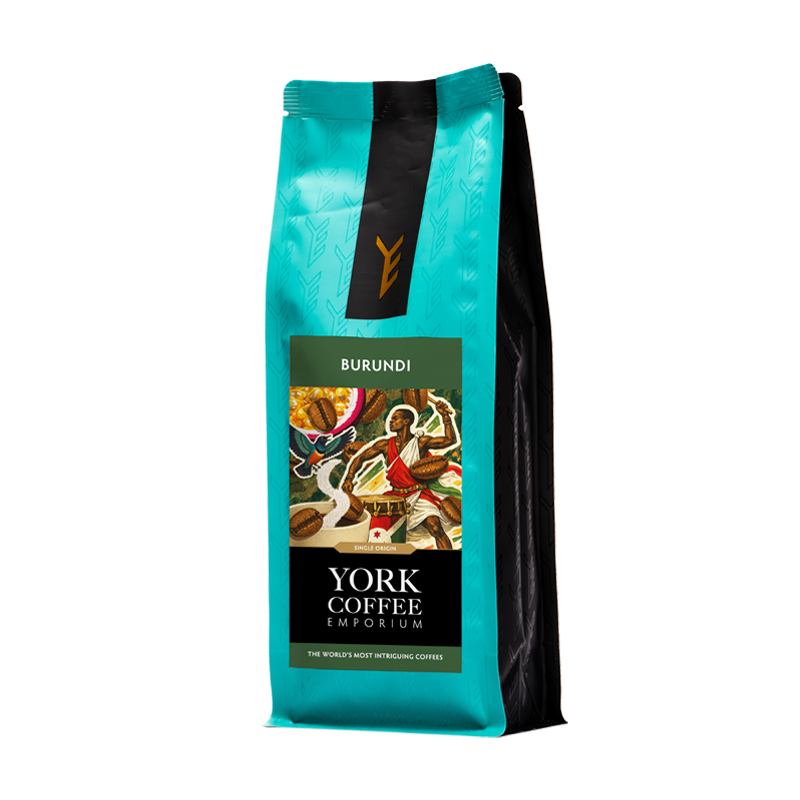
The same hills are home to Kibira National Park, a montane rainforest along the northern edge of Mumirwa whose canopy supports the great blue turaco, Burundi's iconic bird, featured on our label for this release.
It is the watershed from the Kibira that feeds Migoti's washing stations downstream. The coffee plants, the forest shade, the water and the birds all share one landscape, which is a useful thing to keep in mind when you're tasting this coffee.

On the bag
There's a drummer and a turaco featured in our designs for this coffee.
The drummer is a nod to the ritual dance of the royal drum, a centuries-old Burundian tradition inscribed onto UNESCO's list of Intangible Cultural Heritage of Humanity in 2014. The drums are hollowed from single tree trunks and headed with hide, and in pre-colonial Burundi they were sacred objects used to announce coronations, funerals, and the rising and retiring of the king. A dozen or so drummers perform them in a semicircle, rotating between playing and dancing in synchronised waves.
The great blue turaco is the largest of the turaco family and one of the more striking residents of the Albertine Rift forests. It has a grey-blue back, a long tail banded in black, and a high upright crest. The bird lives in Kibira and acts as a critical seed disperser for the rainforest.
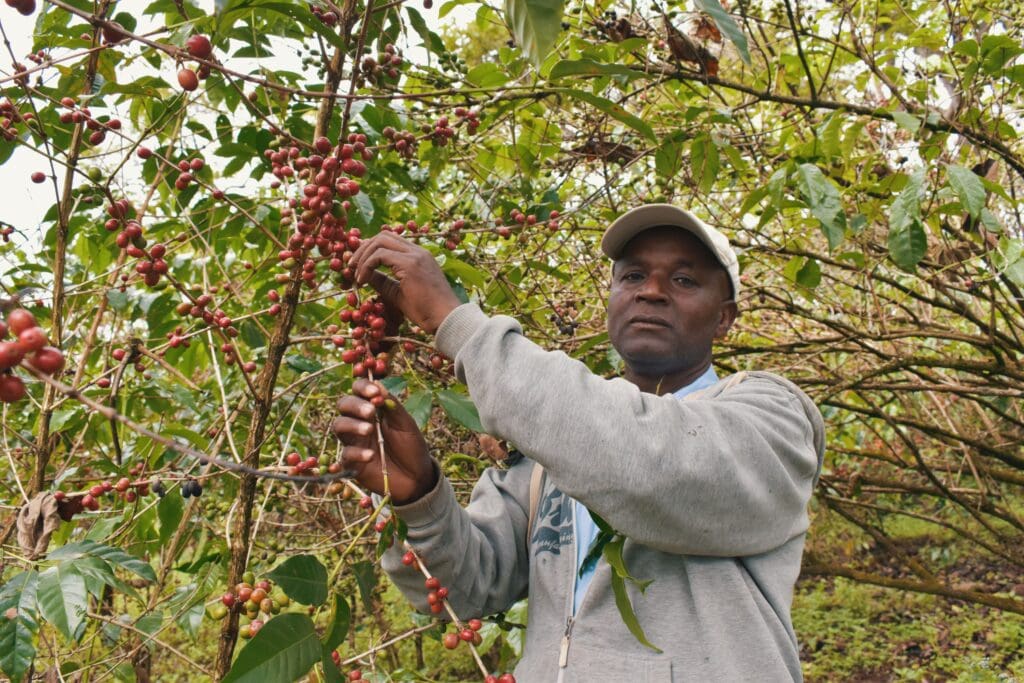
The green coffee itself travelled in a sack drawn by Odran Iteriteka, a Burundian artist who works largely in pencil and ballpoint. Migoti commissions a different local artist every year to produce a piece that gets printed onto every jute sack leaving that harvest. This year's is Odran's portrait of a coffee farmer, originally drawn entirely in blue biro. Previous years have featured a Burundian drummer, a hippo rising from the water, and a woman carrying coffee cherries with a child on her back, the series keeps the human story attached to the coffee, from farm to roastery.

"Tribute to those who make brown gold grow. Coffee starts here, with the hands of a farmer" - Odran Iteriteka
Migoti
Migoti Coffee Company was founded in 2015 by two engineers, Pontien Ntunzwenimana and Dan Brose. Pontien is Burundian, born and raised in the Mutambu Commune of Bujumbura Province, the same hill country where Migoti's main washing station now sits.
Dan is American, and the pair had worked together on infrastructure projects before they turned their attention to coffee. They started with a clear idea: Burundi grows world-class arabica, and Burundian farmers weren't being paid world-class prices for it. A producer-owned operation, processing coffee to international specialty standards and selling directly to roasters abroad, could lift the floor on what a kilo of cherries was worth, and over time the income of the families growing it.
When Migoti started working with farmers around Mutambu in 2019, three hundred and ten of them were registered with the company. By 2023 the number had grown to one thousand two hundred and thirty-six.
A second washing station opened at Kinama that same year, doubling capacity. The company now distributes roughly thirty thousand coffee seedlings annually to farmers in the area, runs a micro-financing scheme that lets growers borrow small amounts to invest in their plots without falling into the predatory lending cycles that have historically trapped coffee farmers across East Africa, and has built an essential oils business buying lemongrass, eucalyptus and artemisia from those same growers to smooth household income between coffee harvests.
In 2024 work started on a fifty cubic metre water reservoir near Kinama, served by a hydraulic ram pump pushing clean water uphill to the surrounding communities. When it's finished, the reservoir is expected to serve over four thousand eight hundred residents.
Earlier this year, one of Migoti's senior team, Zephyrin Banzubaze, qualified as a Q Grader. That's the international standard that lets producers cup and score coffee to specialty grade themselves, rather than sending samples abroad to be assessed by someone else. Few Burundian producers work with a Q Grader of their own. Migoti now does its quality control on site, which sounds like a small thing on paper and is a significant one in practice.
This particular lot came from one hundred and seventy-three named smallholder farmers, with a man called Thomas Kurubone as their lead farmer. They delivered cherries to the Migoti Hill washing station, where the coffee was sorted, floated and pulped.
From there the process diverged from Burundian tradition:
Most of the country's coffee is washed in a two-stage fermentation, first dry and then under water, which strips the mucilage cleanly off the parchment before the beans go onto raised beds to dry. That's the process behind the bright, structured, citrussy cup Burundi is quietly known for.
This lot went a different way, into closed tanks fully submerged in water with the oxygen excluded, fermenting under those conditions for two full days before being washed and dried on raised beds for three to four weeks. The closed tank and the longer fermentation push the sugars further than they go in an open-tank wash, and they retain fruit-forward compounds that conventional processing tends to strip out. That's where the passion fruit, caramel and cream you're tasting come from.

A century of Burundian coffee
Coffee in Burundi is barely a hundred years old. Belgian colonial administrators introduced the first arabica trees in the 1920s and 1930s, and by the 1950s coffee had become the country's main export. The system that grew up around it was extractive in the classical colonial way. Trees were planted under foreign direction, the profits left the country, and the farmers doing the actual work of growing the cherries saw very little of the value chain.
Burundi gained independence in 1962, and the sector was steadily nationalised through the seventies. A state apparatus regulated production, processing and export. Centralised washing stations were built and run by regional companies known as Sogestals, while home processing was actively discouraged. The system was inefficient on paper, but it produced something useful in practice: a recognisable Burundian house style. Buyers who knew the country at all knew it for clean, fully-washed, well-fermented coffees with a structured East African profile.
Then came the civil war. Between 1993 and 2005, the conflict tore through Burundi. Coffee farms were abandoned, replaced with subsistence crops, or simply lost as families were displaced. The industry, which had been one of the country's few stable foreign currency earners, contracted sharply, and by the end of the war much of the nationalisation-era infrastructure was damaged or no longer fit for purpose.
The sector was liberalised in 2008 and 2009. State-owned washing stations were sold off, and private operators, cooperatives and producer-owned ventures like Migoti became possible for the first time. The recovery has been slow and uneven, running alongside a difficult political and economic backdrop, but the quality has steadily come back. Burundi now sits in the low thirties in global coffee production by volume, well behind its larger neighbours, with output small enough that buyers who don't already know the country tend to look elsewhere.
Some of that is understandable. Some of it is a missed opportunity. Rwanda, just across the northern border, runs through a comparable cup profile and gets significantly more international attention. The rebuilding effort that followed the genocide in 1994 was sustained and well-funded, and the Rwandan specialty sector benefited directly. Burundi's parallel recovery has had no equivalent push behind it. The two countries produce coffees that are genuinely close in character, but the reputation of one has outpaced the other for reasons that have nothing to do with what's actually in the cup.
If you'd like to hear more about Burundi coffee directly from someone who works inside the sector, there's a good episode of the Coffee Quality Institute's Conversations in Quality podcast featuring Eddy Nkanagu. Worth a listen.
Out Now
Burundi Migoti Anaerobic is available in 200g, 500g and 1kg bags, across all our usual grind options.
If you'd like first notice when future coffees goes live, join our dispatch list below. Subscribers get the first shout on every new release, and given the size of the lot and the way the last Burundi we ran moved, this one isn't going to hang around long.
The hills above Bujumbura have been growing coffee for not quite a hundred years. This is some of the most interesting coffee that's come out of them yet.
Our Burundi Migoti Anaerobic is out now, grab yours here.